Using Slow Feed Hay Nets for AlpacasUpdated 3 months ago
Alpacas love to kick hay around, sit on it, and generally treat a loose pile of hay as more of a bed (or bathroom) than a meal. A slow feed hay net can help manage this, but it's important to choose the right setup for your herd.
Are hay nets suitable for alpacas?
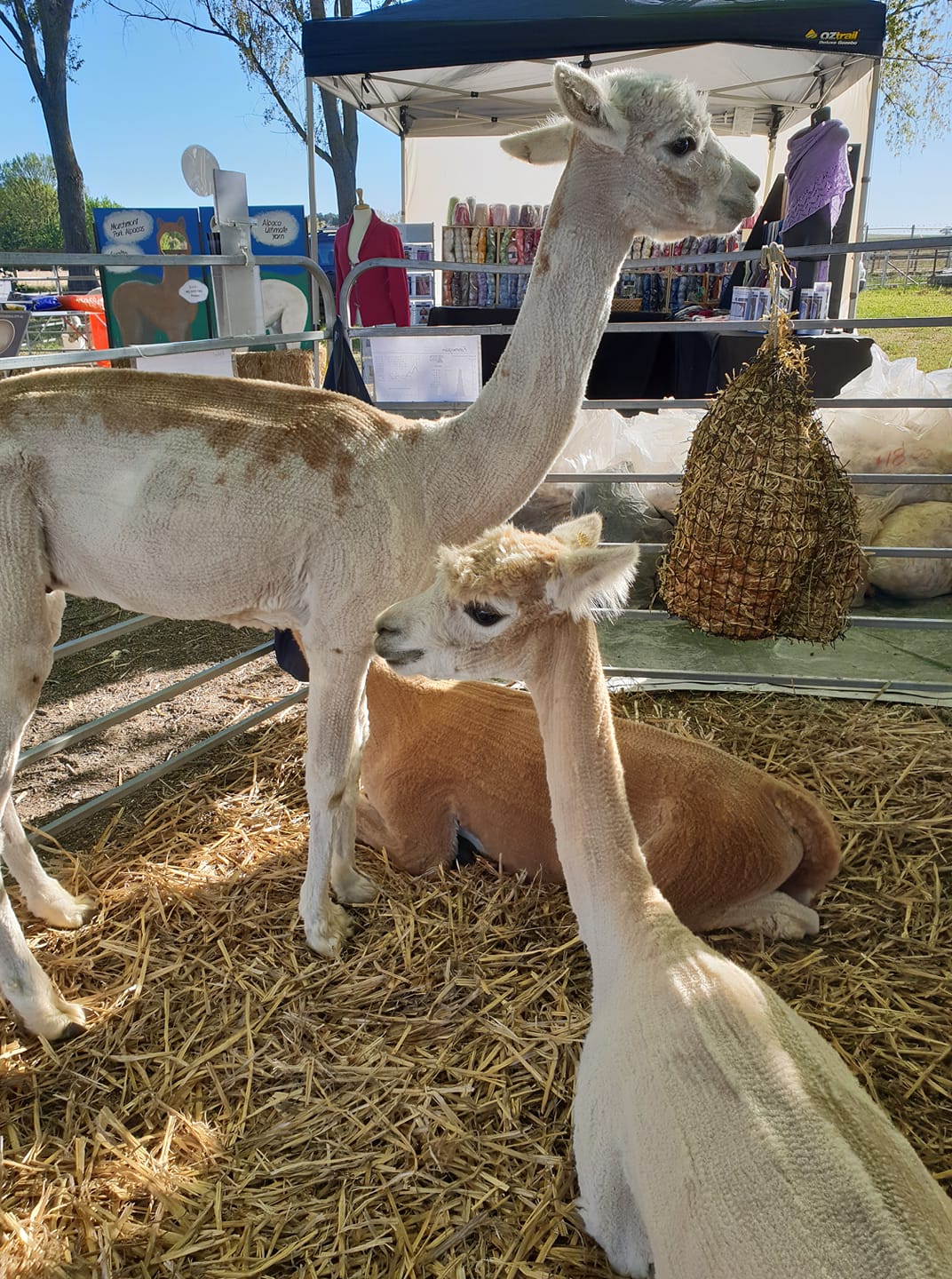
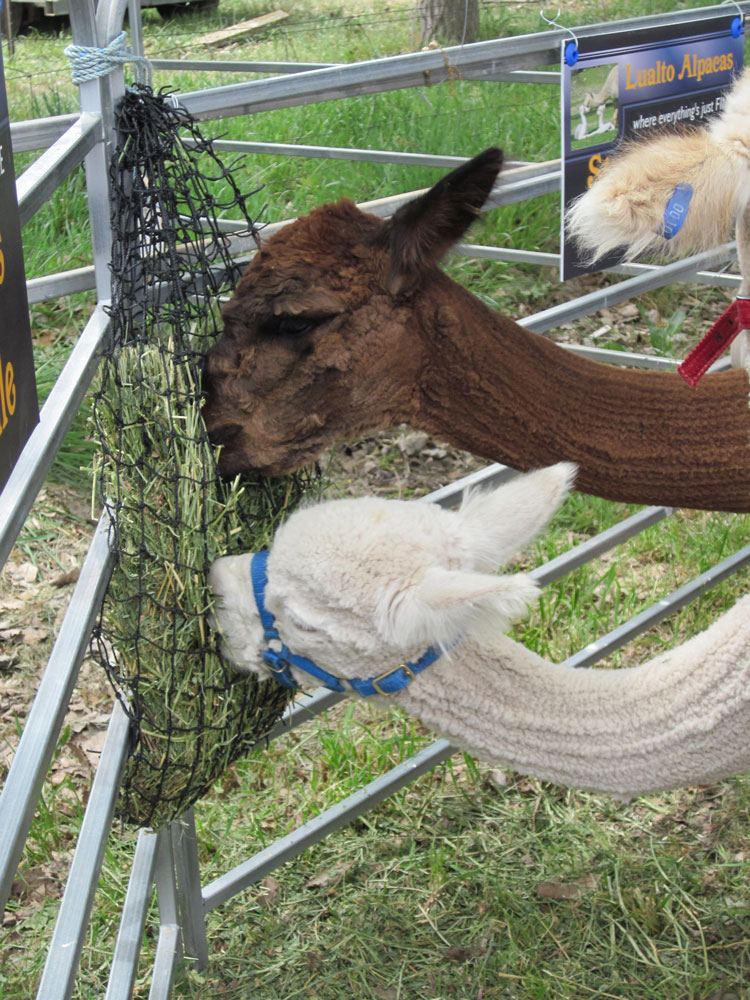
Yes! The owners of Lualto Alpacas kindly let us trial our nets with their livestock at the 2013 Murrumbateman Field Days. They were impressed by how the alpacas were kept amused for a long time, and that they were no longer able to kick up and carry the hay around, then sit on it and use it as a toilet, which is a great save on hay wastage. These nets are ideal for alpacas in situations like field days, agistment, or open pens, keeping the area tidy while giving the animals access to hay all the time.
What hole size should I use?
For alpacas, we generally recommend:
- 3cm (1 ¼") or 4cm (1 ¾") → Alpacas adapt well to either size
- 6cm (2 1/2) → Can work too if they hay is stalky or you don't want to necessarily slow down the eating and just contain the hay.
Your choice will depend on how rich or stalky the hay is:
- Richer / softer hay → go smaller to slow intake
- Stalky / coarse hay → go larger to avoid frustration
Why use a hay net for alpacas?
Using a slow feed hay net is a great option because it keeps hay off the ground and out of reach of feet, reduces waste from kicking, trampling, and soiling, keeps your herd amused for longer, and helps keep pens or paddocks tidy.
Please Note: Monitoring small hooved animals that may jump on hay nets is recommended. Although we have never had an issue reported, it is advised to watch that small feet don't become entangled in the netting. For added safety, choose a hole size smaller than your animal's foot and position the hay net off the ground where possible. This helps reduce the risk of entanglement during feeding.
Ear Tags: We do not recommend using hay nets with livestock that have ear tags, as netting can become caught or hooked. There is a risk of them rubbing against the netting and catching a tag. This can potentially result in the tag being pulled out or the ear being injured. Although we have only ever heard of this happening with alpacas, there is the probability that this could happen with other livestock such as sheep or goats so we recommend that you monitor your stock and be aware that this is a possibility.
For this reason, hay nets are generally better suited to hobby farm situations where stock numbers are low, and the benefits, (reduced waste, slower feeding, etc.) may outweigh the potential inconvenience of tag loss. Ultimately, it is up to the owner to assess whether this product is suitable for their livestock and setup. If you’re unsure, feel free to reach out and we can help guide you toward the best option.
For any specific questions or advice on your livestock setup, feel free to contact us, our team is always happy to assist. For more information on what hole size/s will best suit your livestock, we have more information HERE.
If you'd like to know more, you can also read our other livestock guides:
→ What Size Hole Suits Your Livestock the Best?
→ Are Slow Feeder Hay Nets Suitable for Livestock?
Need help choosing?
If you're unsure what will work best for your alpacas, feel free to reach out. We're always happy to help guide you based on your hay type, setup, and how your herd is currently feeding.