Feeding in Muddy Wet ConditionsUpdated 3 months ago
When the ground stays wet for long periods, it starts to take a toll. Hooves soften, conditions like seedy toe and thrush become more common, and everything just gets that bit harder to manage. Feeding takes longer as you tromp through mud, and everything just becomes more difficult.
And one of the biggest issues we see.. hay going straight into the mud. Throwing a biscuit out in the paddock might seem easiest, but in wet conditions it doesn’t last long. It gets trampled, soaked, and a lot of it ends up wasted.
By feeding through a GutzBusta, you’re keeping the hay up off the ground and out of the mud. It stays cleaner, your horses actually eat more of it, and you’re not constantly throwing away spoiled hay. Let's not forget too, that our hay nets stop your valuable hay from being blown away and further wasted.
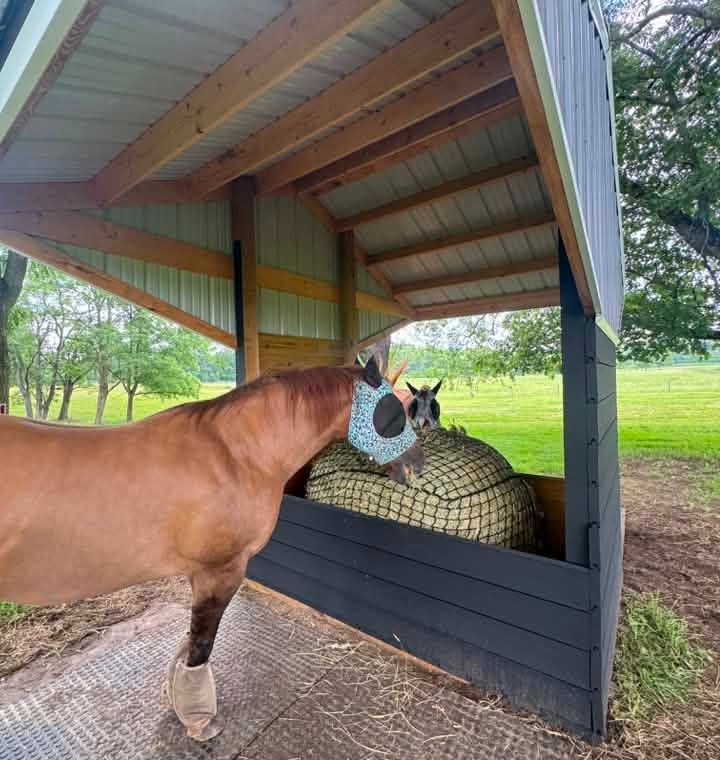
The image below is an awesome example of a great setup sent to us recently by a customer. The round bale is sheltered from rain and mud, however it's open and airy so that the horses will use it, and it has a great flooring surface to keep the horses from standing in mud.
In really wet weather, it’s also worth only putting out what they’ll eat in a day if you are feeding out with smaller nets and you don't have shelter for this. That way you’re not dealing with soggy, mouldy leftovers the next morning.
Winter does help a bit here as hay doesn't go off as quickly as it does in summer but wet hay is still something you want to avoid being wet for too long before it is eaten. This of course differs very much depending on what climate you live in, the temperature and the hay type.
In the past, I had a lovely yummy pasture hay that the horses were very happy to eat when very wet, and I could put out a full small bale in Winter in a Large hay net and they would have it finished in two days without issue of the hay becoming rank. There is no way that I would do this in Summer however under those same rainy conditions.
Using hay nets in wet weather, it is good to try and utilise 'natural' shelters such as trees. Hanging from a tree on the opposite side of the direction the rain/weather is coming from is a great way to use the trunk of the tree to decrease the amount of water that is absorbed.
If the trees available only have high tying points, then throw a rope around the tree and make yourself a lower tying point with a loop. This way, you can tie and secure your drawstring onto this rope, and you aren't tying to the tree itself.
A simple setup can make a big difference: Fill your net, then hang it from a gate, fence, tree, or under some kind of shelter if you’ve got it. It keeps the hay clean, reduces waste, and slows them down so they’re not just scoffing it all in one go. Small changes like this really add up when the weather turns.
The photos below show a few different ways to hang and shelter your nets. These are setups I’ve used myself, along with some great ideas customers have shared that I thought were worth passing on.
Pallets
I've used this myself during the middle of winter, feeding out full bales in large hay nets, even in the rain. Because the pasture hay was still nice and palatable, the horses were eating through it quickly. That's the key here, the hay was gone before it had a chance to go mouldy or rank.
Plastic pallets also make a big difference, keeping the hay up out of the mud and stopping it from getting trampled and soiled. I know this setup won't suit everyone, but the main thing is keeping the hay off the ground and only putting out what they'll eat in a day, or two - depending on the temperature and humidity. Putting out more than a bale isn't something you'd do in hot or humid conditions, or if your horses are slower eaters. If the hay is sitting there too long, it's going to spoil.
One thing worth mentioning, if you are using a wooden pallet then you've got to keep an eye on the gaps between the pallet slats. Ideally, you would fully fill in the pallet so that a hoof cannot get caught in this gap between the slats. It's important to check your pallets are in good condition and the gaps aren't too wide before you use them and that all nails are solidly in place. This needs to be checked regularly.
Using a pallet of any sort isn't recommended for shod horses as it doesn't form a sufficient barrier between the horse's hooves and the netting. The photo on the right below is however a great way to overcome this issue with shod horses.


Home-made Hay Shelter
We've also made our own simple hay shelters using large blue plastic drums, cutting them down to create two covers from each drum and hanging them from trees.
This setup helped keep the rain off the hay from above, while still allowing easy access from the sides for the horses to eat from the hay net. It's a simple option, but it worked well to keep the hay drier without making it harder for them to feed.


Customer Ideas & Solutions
Over the years we have had many photos sent to us by our customers on great ideas and solutions they have come up with to solve problems and make managing their horses or livestock easier. Here is a taste of just a few of these wonderful ideas of keeping your hay dry and out of the mud.
IBC Tank - Modified into a hay feeder
We've seen this a few times over the years, a modified IBC tank turned into a hay feeder. The thick wire frame makes it perfect for placing a slow feed hay net and hay inside. The base is lifted up off the ground, so the hay stays out of the mud, and there's a small cover on top that acts as a mini shelter to keep the rain off.
It's a sturdy option if you want something a bit more semi-permanent, keeping the hay elevated and protected from both directions, ground moisture below and rain from above.


Tarp
A tarp is one of the easiest and most affordable tools you've got for wet weather, and how you use it depends on how much rain is coming.
For heavy or extended rain, put the tarp over the bale first, then place the net over the top of the tarp. This protects the top of the bale and stops water soaking in, while your horses can still eat through the net as normal. As the bale gets eaten down, the tarp lowers with it. It's also a great option if you've got a horse that likes to pull tarps off, since they can't get to it once the net's sitting over it.
For shorter rain events, simply throwing the tarp over the top of the net and securing it with a few straps does the job. Occy straps or Velcro straps can do a great job here. Once the rain passes, pull it off and your horses have full access again.
And don't forget the ground. Moisture travels upward too, so a pallet, rubber matting, or a tarp underneath the bale makes a real difference in wet season.


Shelter Structures
For those wanting something more permanent, a proper shelter structure is the ultimate solution for keeping hay dry, just a dedicated dry spot for feeding.
This isn't going to suit every property - especially if your horse isn't on your own property, and it's a bigger investment than a pallet or a tarp, but if you've got the space and the setup for it, it takes wet weather feeding off your mind completely. Whether it's a small standalone structure, or something built specifically for hay storage and feeding, having a permanent cover means you're never caught out when the weather turns.
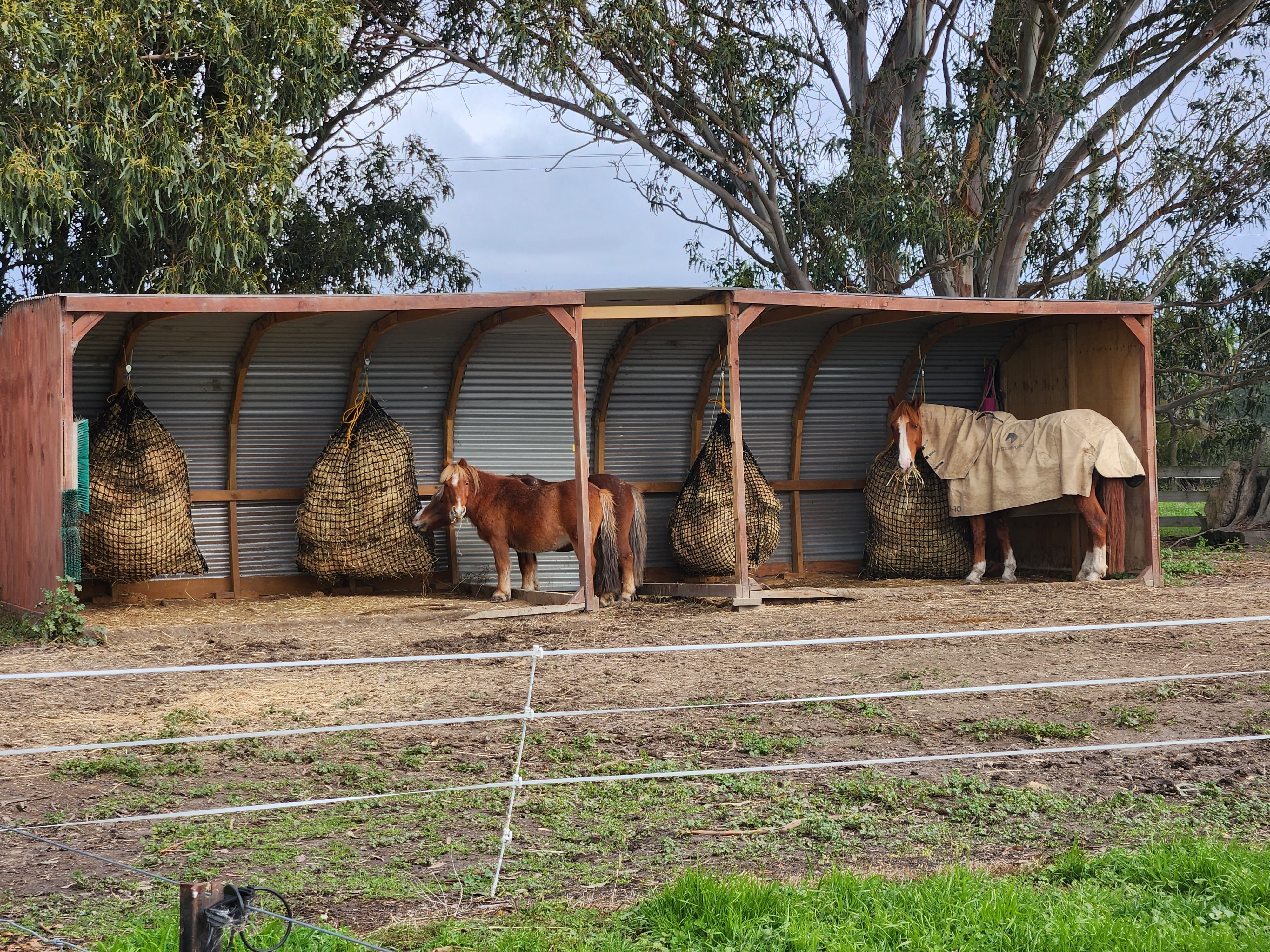
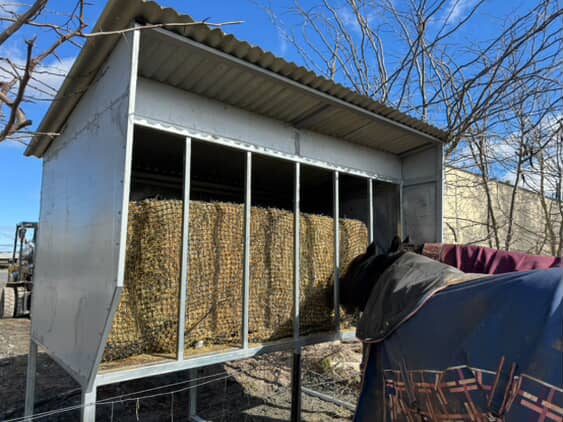
Below are a few examples from our customers, different builds, different budgets, but all doing the same job of keeping hay dry and horses fed, rain or shine.


Below is also a great DIY hut set up made by one of our customers. Using a Hay-Stay net and a bucket underneath to catch the loose hay when it falls. The titled roof will allow protection from the rain while still keeping it open and easy for the horse to feed from.


Below is one of my favourite setups shared to us by a customer. It's nice and open and airy and the horses have multiple hay nets to eat from and if there are any dominance issues, then they have plenty of escape room.


Wet weather feeding doesn't have to mean wasted hay. Whether it's a pallet under a bale, a tarp when the rain rolls in or a permanent shelter for the long run, small changes make a big difference to keeping your horses fed well and your hay out of the mud.
If you've got a setup that works for you, we'd love to see it!